

Occupancy Rate Explained: Maximising Rental Income


Filling your calendar with guest bookings often feels like a balancing act for every Cardiff or Newport property owner running short-term lets. The difference between a fully booked flat and one that sits empty is more than just luck; it is shaped by the local visitor economy, ever-changing regulations, and community needs. This guide explains how to accurately calculate and understand your occupancy rate, revealing practical ways to boost profitability and stay compliant in the Cardiff and Newport market.
Table of Contents
Key Takeaways
Point | Details |
Occupancy Rate Importance | The occupancy rate is a key metric for rental revenue, with higher rates directly translating to increased income. |
Calculation Accuracy | Ensure accurate tracking of available and booked nights to inform pricing and marketing strategies effectively. |
Local Market Dynamics | Understanding local tourism trends, competition, and transport accessibility is crucial for optimising occupancy rates. |
Compliance Obligations | Adhering to safety regulations and obtaining necessary permits is essential to avoid penalties and sustain operations. |
Occupancy rate in short-term rentals defined
Occupancy rate is simply the percentage of days your property is booked and occupied by paying guests throughout a specific period. It’s the backbone metric that determines how much revenue you’re actually generating from your rental.
Imagine you own a flat in Cardiff. If it’s available 365 days per year but booked for only 250 of those days, your occupancy rate is roughly 68%. The remaining 115 days sit empty, earning nothing.
For short-term rental owners, this metric matters more than almost anything else. Higher occupancy directly translates to higher income. A property with 80% occupancy will consistently outperform one at 50%, regardless of nightly rates.
What Makes Occupancy Different in Short-Term Rentals
Short-term lets operate differently from long-term rentals. The frequency of guest turnovers, the intensity of property use, and the patterns of arrival and departure all shape your occupancy rate. Short-term lets rules protect communities whilst balancing visitor economy needs, which means understanding local regulations affecting your property’s availability is crucial.
Your occupancy rate isn’t just about filling calendar slots. It reflects:
Guest demand in your location during different seasons
Your pricing strategy and how competitive your nightly rate is
Property condition and appeal as shown in photos and reviews
Guest experience quality that drives repeat bookings and referrals
Local market trends and tourism patterns specific to Cardiff or Newport areas
The Formula (It’s Simple)
Occupancy rate = (Number of nights booked ÷ Total nights available) × 100
That’s it. If your property was available 90 nights and booked for 72 nights, you’ve got 80% occupancy.
Your occupancy rate directly determines your revenue potential, making it the single most important metric for short-term rental success.
Many property owners focus on raising their nightly rate instead of improving occupancy. That’s backwards. A £50 nightly rate with 30% occupancy generates less than a £30 rate with 70% occupancy.
Pro tip: Track your occupancy rate monthly and identify seasonal patterns unique to your property. Use this data to adjust pricing, boost marketing, or improve listings during your slower months.
Calculating occupancy rate and common errors
Calculating your occupancy rate sounds straightforward, but many property owners make mistakes that skew their numbers. Getting this right matters because wrong calculations lead to poor decisions about pricing, marketing, and property improvements.
The basic calculation is straightforward: divide nights booked by nights available, then multiply by 100. But the devil lives in the details of what you count as “available” and what you count as “booked”.
The Step-by-Step Calculation
Here’s how to do it properly:
Count total nights your property was actually available for booking during your measurement period (usually a month or year)
Subtract any nights you blocked for personal use, maintenance, or cleaning
Count nights with confirmed guest bookings
Divide booked nights by available nights
Multiply by 100 to get your percentage
Common Mistakes That Distort Your Numbers
Many Cardiff and Newport property owners miscalculate occupancy by making these errors:
Including maintenance days as booked nights when guests never stayed
Counting partial nights inconsistently (some nights as full, others as half)
Forgetting to exclude blocked dates from your available night total
Including cancelled bookings that never resulted in actual stays
Not accounting for turnover time between guests (cleaning, inspections, restocking)
Misclassifying definitions of what constitutes occupancy based on household composition variations
Occupancy definitions vary by context and purpose; ensure you’re tracking consistently for your business.
One owner thought they had 75% occupancy until they recalculated and removed cancelled bookings—it dropped to 62%. That’s a massive difference in how you’d approach your business strategy.
What “Available” Actually Means
Available nights are every night your property could theoretically be booked, minus legitimate blocked dates. Legitimate blocks include:
Scheduled deep cleaning (2-3 nights)
Planned maintenance or repairs
Personal use of the property
Mandatory turnover time between guests
Things that don’t count as blocks: bad weather, lack of bookings, or market slowdown. These are part of normal occupancy variation.
Consistent, accurate tracking prevents you from making costly decisions based on incorrect data.
Pro tip: Set up automated tracking in your property management system from day one, recording every booked night and blocked date immediately, so you never have to reconstruct numbers from memory.
Factors that influence occupancy rates locally
Your occupancy rate isn’t determined purely by your own efforts. Local factors shape demand, guest flow, and booking patterns in ways you can’t fully control. Understanding these influences helps you set realistic targets and identify genuine opportunities.
Cardiff and Newport each have distinct local dynamics that directly affect how frequently guests book your property. A flat near Cardiff Castle faces completely different occupancy patterns than one in a quieter suburb.
Local Tourism and Seasonal Demand
Tourist flow varies dramatically by location and season. Summer months bring steady bookings; winter can feel silent. Business travel patterns matter too—properties near conference venues or corporate offices maintain stronger occupancy year-round.
Local events and attractions drive demand spikes. If your property sits near a major venue hosting festivals, concerts, or sporting events, expect significant occupancy boosts during those periods. Meanwhile, properties in quieter residential areas may struggle during off-season months.
School holidays create another layer of seasonal variation. Families book during half-terms and summer break, whilst business travellers prefer weekdays outside holidays.
Housing Stock and Local Competition
The number of short-term rental competitors in your area directly influences your occupancy. A street flooded with holiday lets creates competitive pressure that drives down both rates and occupancy. Areas with fewer competitors often show higher occupancy because guest demand concentrates there.
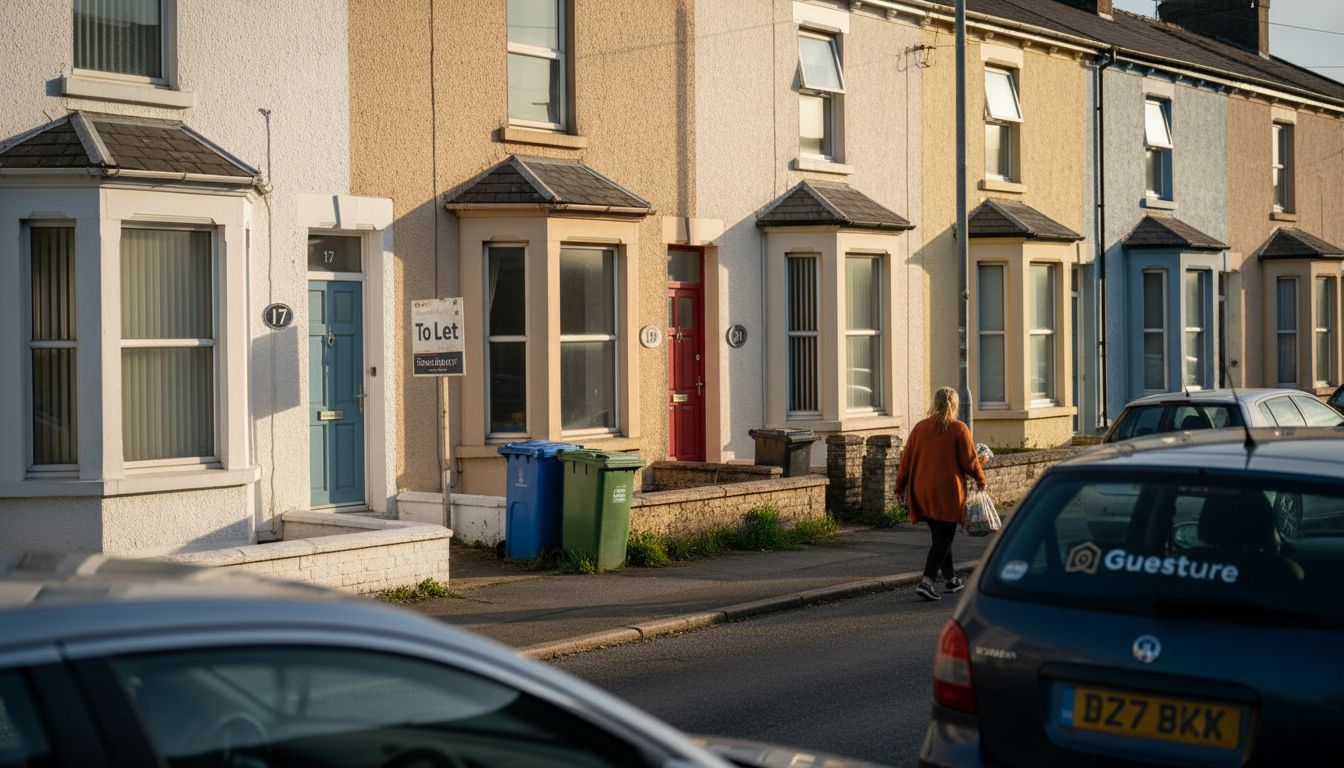
Local housing demographics and household composition shape what types of guests your property attracts. Family-oriented neighbourhoods attract group bookings; city-centre locations attract solo travellers and couples.
Available supply of competing properties varies by postcode. Check how many similar properties operate in your specific area.
Transport Links and Accessibility
Proximity to transport significantly impacts occupancy. Properties near Cardiff Central Station or Newport town centre outperform those requiring car journeys. Guests prioritise easy access to public transport, attractions, and amenities.
Walkability to restaurants, shops, and entertainment venues drives booking decisions. A property on a vibrant street with foot traffic attracts more enquiries than one in a quiet residential pocket.
Migration and Population Patterns
Population movement affects local occupancy dynamics. Areas experiencing migration growth typically see increased demand for short-term accommodation. Business relocations or new industries attracting workers create sustained occupancy opportunities.
Certain neighbourhoods attract specific guest demographics—young professionals, families, retirees, or international visitors. Understanding your local population composition helps you position your property appropriately.
Below is a summary of how local factors impact short-term rental occupancy rates in Cardiff and Newport:
Local Factor | Typical Impact on Occupancy | Example in Cardiff/Newport |
Nearby attractions | Boosts during events | Principality Stadium events increase bookings |
Seasonal tourism | Highs in summer, lows in winter | Cardiff Bay busy in summer months |
Transport connections | Sustains steady bookings | Proximity to Cardiff Central Station |
School holidays | Increases family bookings | More bookings during half-term breaks |
Local competition | Can reduce occupancy | Many rentals in city centre lower rates |
Local factors create natural occupancy ceilings and floors; your job is optimising within your area’s constraints.
Pro tip: Monitor your local competitor landscape monthly by checking how many similar properties exist within your postcode, tracking their availability and adjusting your strategy based on supply competition rather than fighting an unwinnable pricing war.
Assessing risks, legal duties, and compliance
Short-term rental operation isn’t just about maximising occupancy—you have legal duties that directly impact your property and finances. Failing to meet these obligations creates serious risks, from financial penalties to enforcement action. Understanding your compliance requirements upfront prevents costly mistakes later.
Wales has its own regulatory landscape separate from England, but both regions demand careful attention to safety, documentation, and tenant rights. As a Cardiff or Newport property owner, you must stay current with evolving regulations affecting your specific location.
Key Legal Duties for Short-Term Rental Operators
Your responsibilities as a short-term rental owner include:
Safety compliance including gas and electrical safety certificates, fire safety equipment, and regular inspections
Planning permission and change of use documentation if your property wasn’t previously authorised for short-term letting
Insurance coverage specifically for holiday lets, not standard residential policies
Tax registration and income reporting to HM Revenue & Customs
Guest safety standards including proper facilities, cleanliness, and disclosed hazards
Local council registration where mandatory (Cardiff and Newport have specific registration requirements)
New landlord duties under updated tenancy legislation establish standards for written agreements, property conditions, and communication procedures. Non-compliance carries financial penalties and potential enforcement action.
Planning and Regulatory Risk
Before operating any property as a short-term rental, verify you have planning permission. Changing residential use to holiday letting often requires formal approval. Operating without permission can result in enforcement notices forcing you to cease trading.
Contact your local council (Cardiff Council or Newport Council) to confirm your property’s status. Some areas have specific conditions limiting short-term letting density or duration.
Insurance and Liability
Standard residential insurance explicitly excludes short-term rental income. You need specialist holiday let insurance covering guest liability, property damage, and income protection. Operating uninsured exposes you to catastrophic financial loss if accidents occur.
Guests expect safe accommodation. Injury claims from faulty equipment, unsafe conditions, or inadequate fire safety can devastate your finances without proper coverage.
Documentation and Record-Keeping
Maintain thorough records including:
Safety certificates renewed on schedule
Guest check-in documentation
Maintenance and repair records
Income and expense records for tax purposes
Correspondence with guests and contractors
Proper documentation protects you if disputes arise and demonstrates regulatory compliance.
The table below highlights key legal obligations and their importance for short-term rental operators:
Legal Duty | Purpose | Consequence of Non-Compliance |
Safety certification | Ensures guest wellbeing | Fines, legal liability, potential closure |
Planning permission | Confirms correct property use | Enforcement action by local authorities |
Holiday let insurance | Protects against liabilities | Uncovered claims, financial risk |
Tax registration | Complies with HMRC rules | Penalties, interest charges |
Proper documentation | Proves compliance, aids dispute resolution | Disputes harder to defend legally |
Compliance isn’t optional—it’s the foundation of sustainable, profitable short-term rental operation.
Pro tip: Engage a compliance specialist or property management company familiar with Cardiff and Newport regulations from day one; the cost of professional guidance is trivial compared to penalties from operating without proper permissions, insurance, or safety certificates.
Maximising occupancy rate using technology
Manual occupancy management is exhausting and inefficient. Modern technology handles pricing adjustments, guest communication, booking analysis, and demand forecasting automatically, freeing you to focus on strategic decisions. The right tools directly increase your occupancy by ensuring competitive pricing, faster response times, and data-driven listing optimisation.
Cardiff and Newport property owners who adopt technology-driven management consistently outperform those relying on spreadsheets and guesswork. Automation reduces human error, identifies booking patterns you’d miss manually, and responds to market changes instantly.
Property Management Systems (PMS)
A property management system centralises all your bookings, guest communications, and operational tasks in one platform. Instead of checking multiple booking sites separately, your PMS synchronises calendars across Airbnb, Booking.com, and other platforms automatically.
Key benefits include:
Real-time availability synchronisation across all channels
Automated guest welcome messages and check-in instructions
Unified inbox for all guest enquiries
Turnover scheduling and housekeeping coordination
Financial reporting and income tracking
This eliminates double-bookings, responds to guest questions within minutes, and ensures consistent guest experience across all platforms. Faster responses and coordinated operations directly boost occupancy by preventing cancellations and improving reviews.
Dynamic Pricing and Demand Forecasting
Dynamic pricing technology adjusts your nightly rates automatically based on demand, local events, competitor pricing, and booking patterns. Instead of static rates, your price rises during peak periods and drops during slower seasons—maximising revenue at both ends.
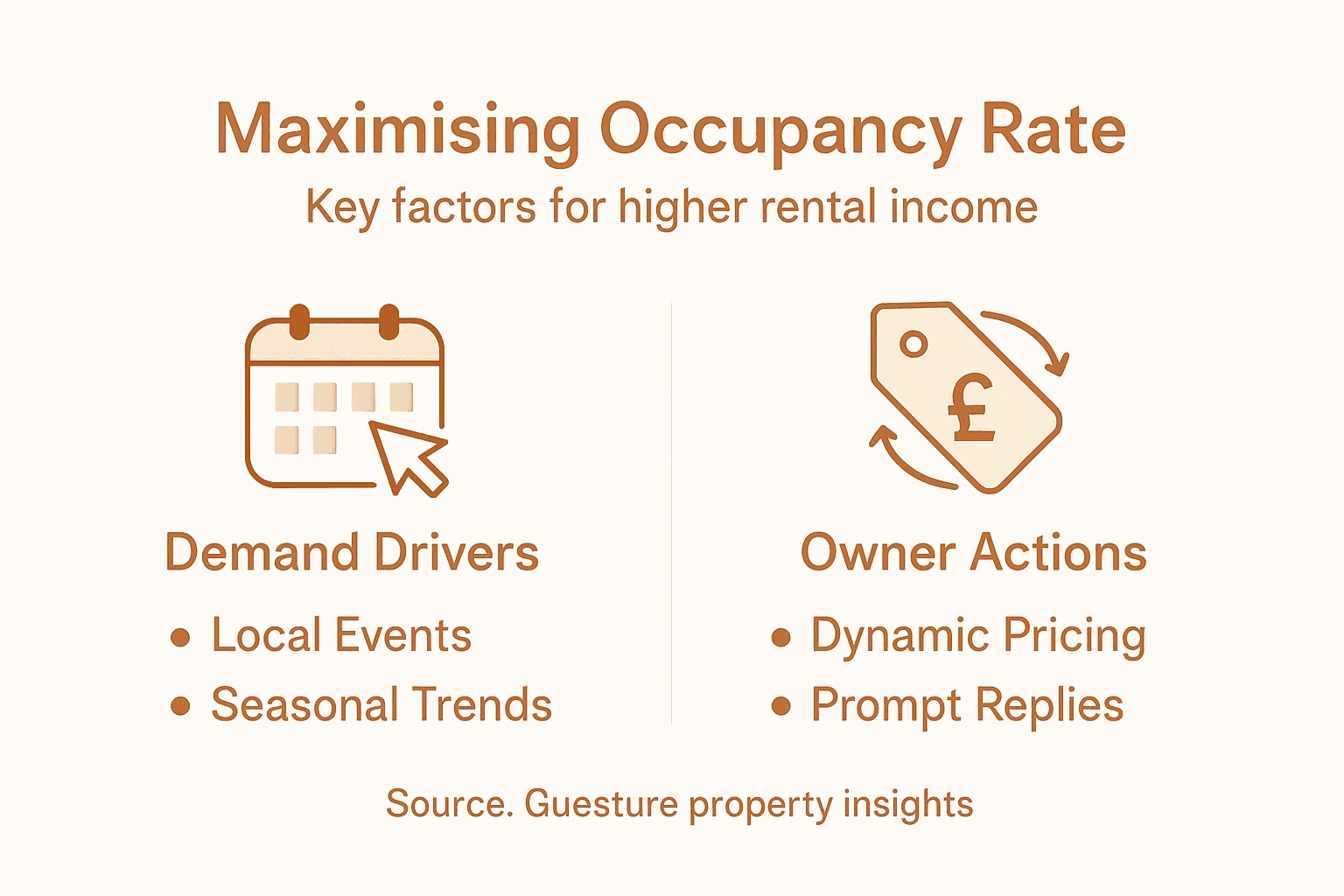
AI-enabled pricing analysis optimises rental yields by forecasting demand trends and adjusting rates intelligently. Pricing tools analyse thousands of data points to identify the optimal rate that attracts bookings without leaving money on the table.
When competitors’ prices drop, your system responds. When local events drive demand spikes, your rates adjust upward. This continuous optimisation increases both occupancy and revenue simultaneously.
Guest Communication and Automation
Automated messaging systems send instant responses to enquiries, reducing response time from hours to seconds. Guests receive immediate confirmation, check-in details, and house instructions without you lifting a finger.
Faster response times improve booking conversion rates. Studies show properties responding within minutes book significantly more frequently than those responding hours later. Automation ensures you never miss a potential booking because you’re asleep or busy.
Analytics and Performance Tracking
Your PMS provides detailed analytics showing occupancy trends, revenue per available night (RevPAN), guest demographics, and seasonal patterns. You can identify exactly when your property underperforms and why.
This data reveals opportunities: perhaps weekday rates need adjustment, or marketing should focus on a specific guest type during certain seasons. Without analytics, you’re making decisions blind.
Technology doesn’t replace good management—it amplifies your efforts, automating tedious tasks whilst providing insights to drive smarter decisions.
Pro tip: Implement a PMS with dynamic pricing capabilities and track your metrics monthly; the 20-30% occupancy improvement most owners achieve pays for the software within weeks.
Boost Your Short-Term Rental Occupancy with Expert Management
Understanding and maximising your property’s occupancy rate is fundamental to increasing rental income but achieving consistently high occupancy in Cardiff or Newport can be challenging. The article highlights key obstacles such as optimising pricing, managing booking calendars accurately, handling guest communication promptly, and navigating local compliance requirements. These issues often overwhelm property owners, leading to missed revenue and avoidable risks.
At Guesture, we tackle these exact challenges by delivering complete, hands-on management solutions tailored for South Wales landlords. Using advanced property management systems, dynamic pricing tools, and automated guest messaging, we ensure your occupancy rate improves without increasing your workload. Our professional listing optimisation and strict compliance management help you avoid costly mistakes outlined in the article so you enjoy higher returns and peace of mind.
Start transforming your rental performance today by partnering with a team that understands local factors and uses technology to maximise every booking opportunity.

Discover how Guesture can elevate your occupancy and income at Guesture Explore our full service offerings and expert support designed specifically for Cardiff and Newport owners at Guesture Professional Management Contact us now to protect your property long-term and boost bookings with confidence.
Frequently Asked Questions
What is an occupancy rate in short-term rentals?
The occupancy rate in short-term rentals is the percentage of days that a property is booked and occupied by paying guests over a specific period. It’s a critical metric for determining rental income.
How do I calculate my occupancy rate?
To calculate your occupancy rate, use the formula: (Number of nights booked ÷ Total nights available) × 100. For example, if your property was available for 60 nights and booked for 45 nights, your occupancy rate is 75%.
What factors influence occupancy rates for short-term rentals?
Several factors affect occupancy rates, including local tourism trends, seasonal demand, competition from other rentals, and the property’s location relative to local attractions and transport links.
How can technology help improve my occupancy rate?
Technology such as property management systems can automate bookings and pricing adjustments, enhance guest communication, and provide analytics that help track performance and optimise strategies to improve occupancy rates.
Recommended


Comments